A Changed America: How Should Canada and the World Respond?
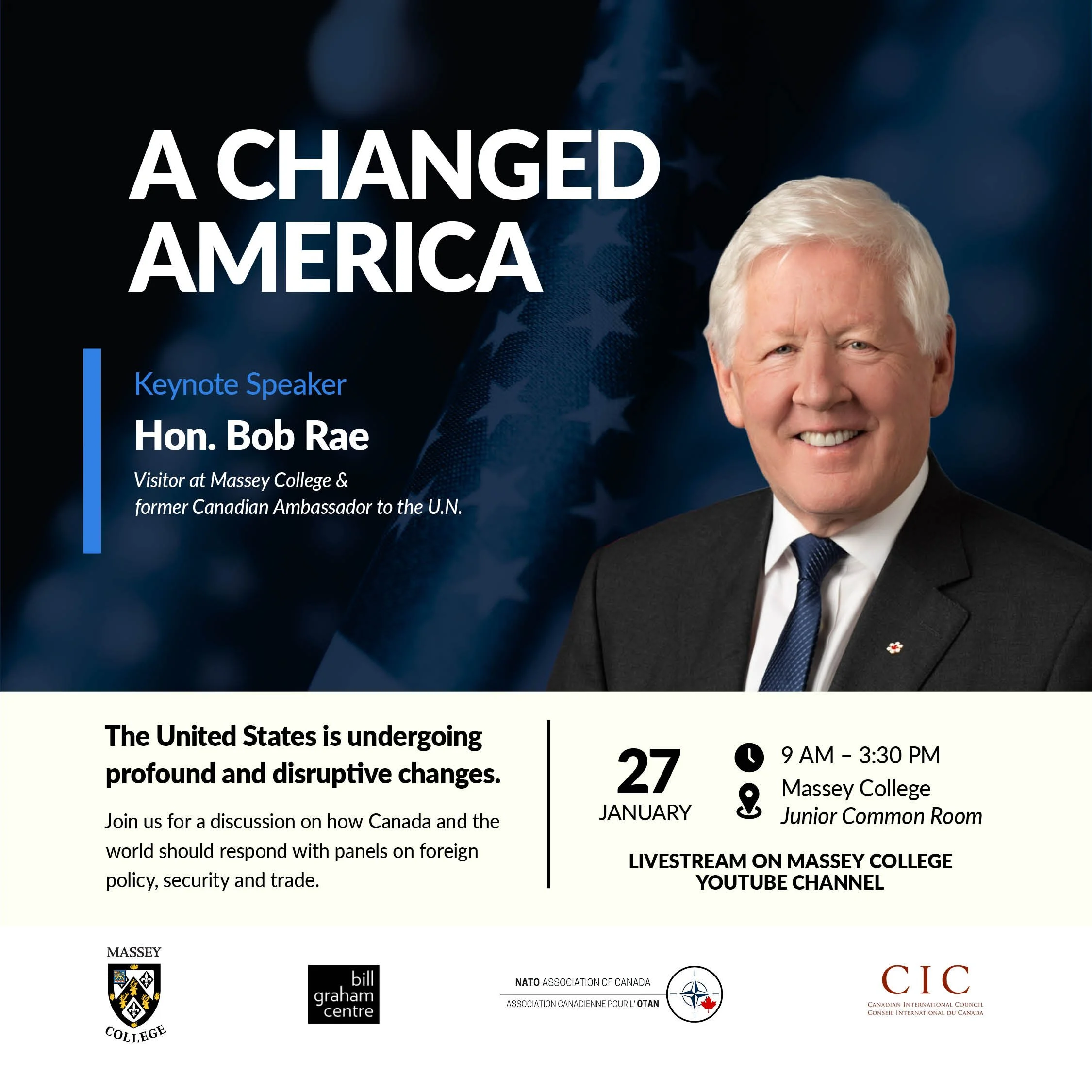
This conference will examine how Canada and the international community should respond to profound political changes underway in the United States.
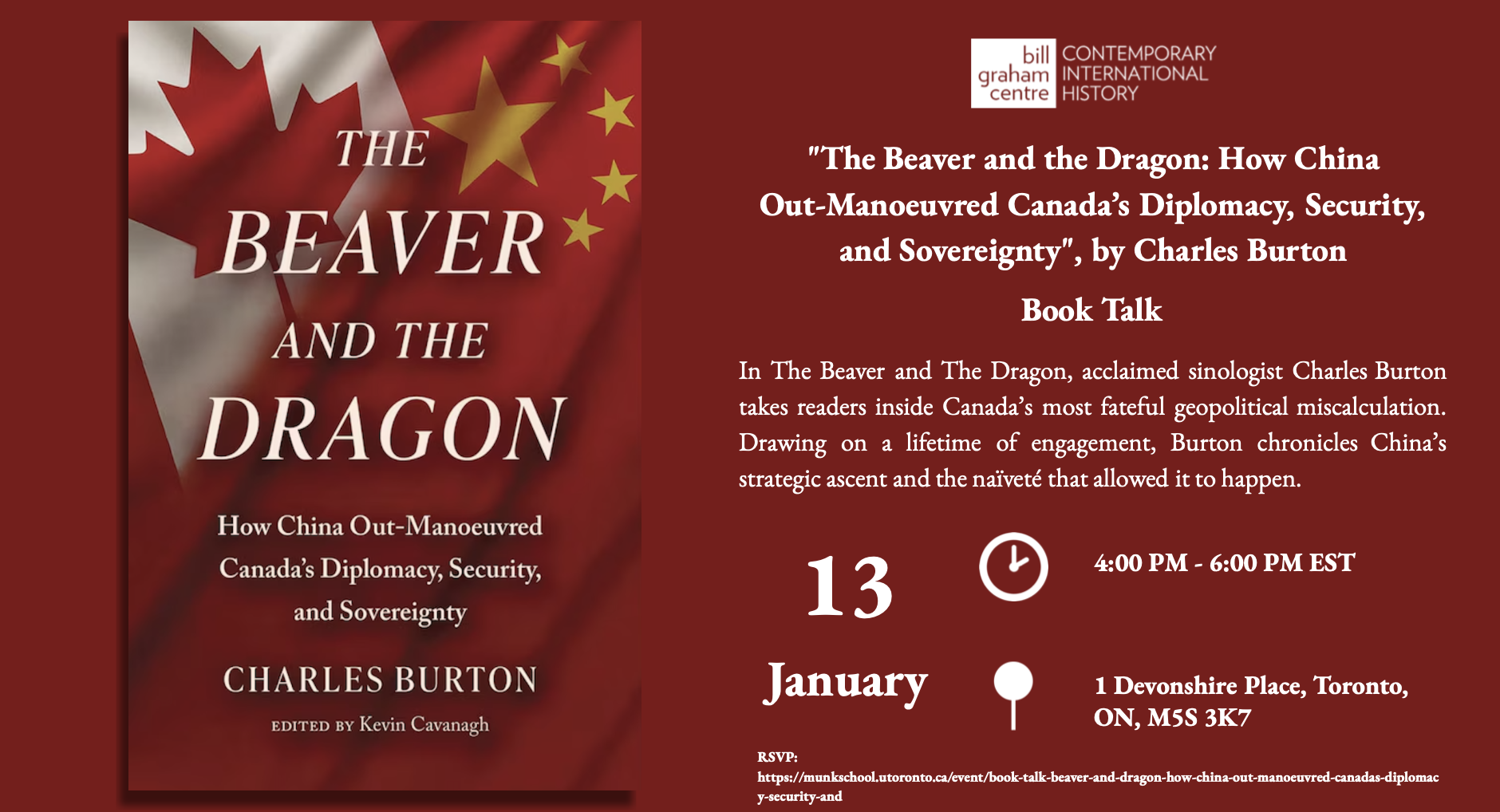
In The Beaver and The Dragon, acclaimed sinologist Charles Burton takes readers inside Canada’s most fateful geopolitical miscalculation. Drawing on a lifetime of engagement, Burton chronicles China’s strategic ascent and the naïveté that allowed it to happen.
Join us as George S. Takach shows us why Taiwan matters—to its own people and to the world—and why democracies everywhere advance their national interests when they support it.
Join us for a conversation with Dr. John F. Jungclaussen, historian, commentator and former London Bureau Chief of one of Germany’s leading newspapers, Die Zeit, on the ascendancy of right-wing populism in much of Europe.
As Canada's longest serving, arguably most successful, and certainly most eccentric Prime Minister, William Lyon Mackenzie King is a figure of perennial fascination. Join us for fresh perspectives on neglected aspects of King's life and career.
This talk will analyze the complexities inherent in the reciprocity of war and strategy by examining coalition warfare through the prism of the British Army’s experiences in Multi-National Division South East (MND SE) and Basra in the Iraq War, 2006-2009.
Join us for the launch of On the Ground: My Life as a Foreign Correspondent with special guest Brian Stewart. On the Ground is powerful memoir revealing the pressures, joys, and traumas of witnessing history up close and personal, from one of Canada’s most prominent and decorated foreign correspondents.
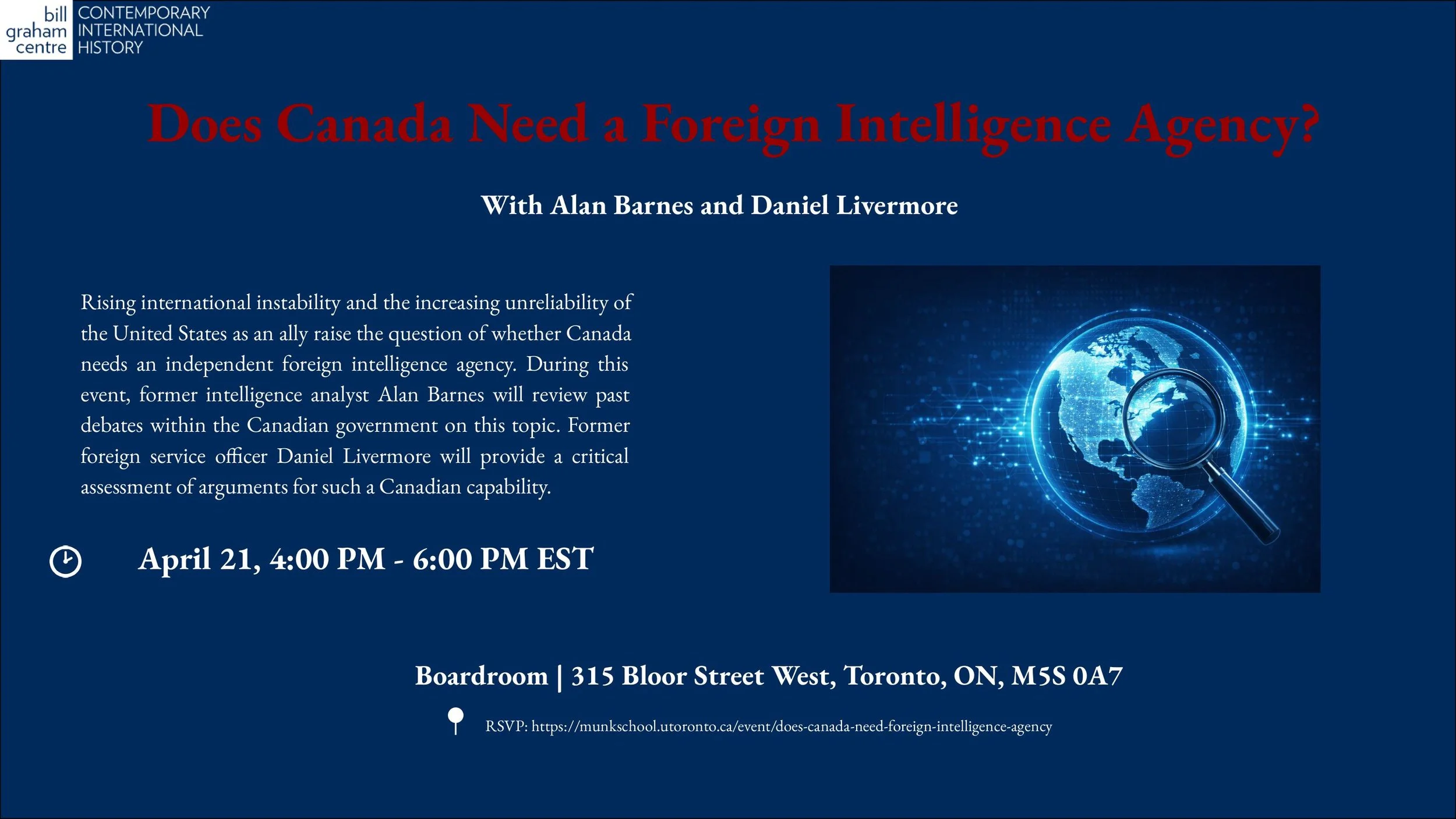
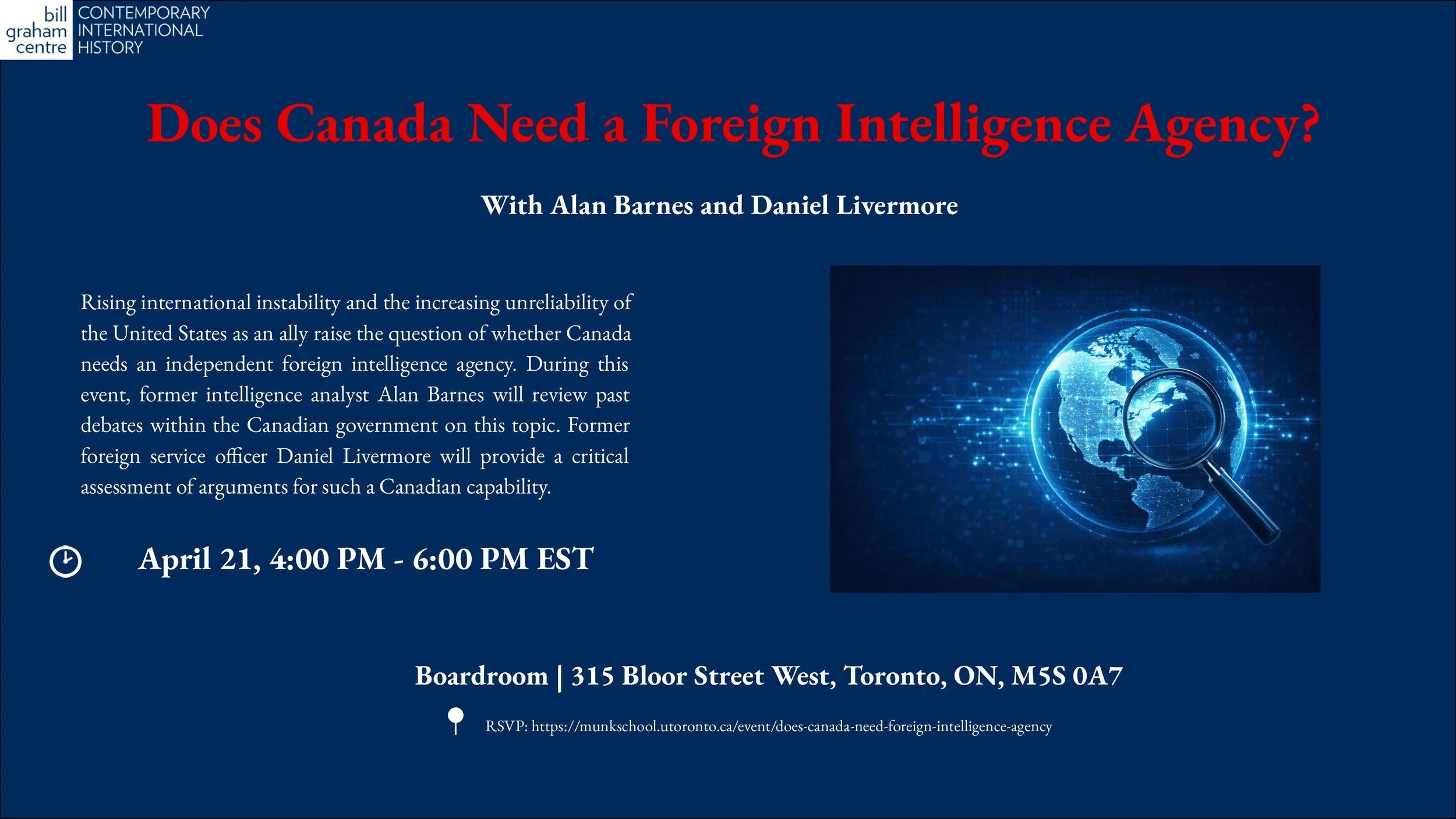
Join us for discussion of two recent books exploring a neglected dimensions of both Canadian and international history - Canadian Intelligence in the Cold War. Alan Barnes explores the role of Canadian intelligence in continental defence policies, while Timothy Andrews Sayle traces the evolution of intelligence cooperation between Canada, Britain, and the United States.
Join us for the launch of Chrétien and the World: Canadian Foreign Policy from 1993 to 2003 with special guest the Rt. Hon. Jean Chrétien. Books will be available for purchase. A private reception will follow the presentation. This book launch is part of 2025 Couchiching Conference, co-hosted by the Canadian International Council and the Aga Khan Museum.
Join a discussion with journalist Tim Mak about the ongoing Russo-Ukrainian War. As founder of The Counteroffensive, a Kyiv-based publication that covers the war from the ground, Mak speaks with authority on questions of strategy and tactics, the role of changing military technology, the geopolitics of the conflict, and the experiences of those caught up in it.
This roundtable will debate what the International Journal's dictum, to 'contribute in a substantial way to the knowledge of Canadians on problems of international relations and [to] express to other countries the Canadian viewpoint on international questions,' means today.
The Canadian International Council is honoured to welcome Edward Luce, Chief U.S. Commentator and Columnist for the Financial Times, to deliver a special lecture on May 26, 2025 in Toronto.
Join us for an evening of expert insight and timely discussion exploring Canada’s approach to hosting the G7 Summit in Kananaskis, Alberta—marking both the G7’s 50th anniversary and the first multilateral engagement on the world stage for President Trump in his second term.
Join Canadian foreign policy expert and author Adam Chapnick for a discussion on our changing world, Canada's place in it, and the relationship with the U.S. under Trump.
Erin O'Halloran offers a compelling new account of the era immediately preceding decolonization and the epochal partitions of India and Palestine. Alongside well-known figures like Mohandas K. Gandhi, Jawaharlal Nehru, and Saad Zaghlul, she introduces less familiar but no less intriguing personalities: feminists, diplomats, and poets; surrealists, socialists and spies.
Policy in Action: Spencer Wilkinson and the Foundations of Modern Grand Strategy
A Discussion with Paul Ramsey
Sponsored by the Bill Graham Centre for Contemporary International History
Date: Monday, March 10, 2025
Time: 4:00 pm-6:00 pm, EST
Location: Room 208, North House, Munk School, 1 Devonshire Place, Toronto, ON, M5S 3K7
About the Event
This talk examines Spenser Wilkinson's pivotal role in shaping modern grand strategy amidst nineteenth-century industrialization and globalization. Wilkinson broadened strategy to encompass all national resources, integrating military and policy dimensions to address the complexities of imperial defence. The talk explores his vision of grand strategy as national policy in action. It also traces how his ideas impacted later scholars, challenging the attribution of grand strategy’s origins to figures like J.F.C. Fuller and Basil Liddell Hart. By revisiting Wilkinson’s contributions, the talk illuminates the historical roots of grand strategic thought and its relevance to contemporary security challenges. It argues that Wilkinson laid the foundations of modern grand strategic thought, offering a comprehensive framework that remains pertinent today.
About the Speaker
Paul Ramsey is a historian of war and strategy. Paul is ABD in history at the University of Calgary, and a visiting researcher at the University of Toronto. He was the Edward S. Miller Research Fellow in Naval History at the United States Naval War College. He completed his MA in the History of Warfare in the Department of War Studies at King’s College, London, and his BA in Military and International History at the University of Salford. Paul’s research examines the early academic writing about national strategy and public opinion about war. His dissertation shows the role of Spenser Wilkinson, a leading thinker on war, strategy and society, in the professionalisation of strategic planning and national defence policy in First World War era Britain.
Sviatoslav Shevchuk, head of the more than 5 million Ukrainian Catholics worldwide, will deliver a public lecture at the Isabel Bader Theatre at Victoria College (93 Charles Street West) at the University of Toronto on February 25 at 7 p.m.
Professor and New York Times best-selling author Timothy Snyder will respond to the lecture. Snyder teaches at the University of Toronto’s Munk School of Global Affairs & Public Policy and is a leading public intellectual in modern Central European politics.
In 1962, Dr. Robert James Sutherland, a defence scientist and strategic advisor with the Defence Research Board (DRB), presented a paper at the Canadian Institute of International Affairs (CIIA) in Toronto. His talk, “Canada’s Long-Term Strategic Situation,” which explored the likely shape of Canadian strategic choice out to the end of the century, went far better than he might have expected. On February 25, Sutherland’s biographer, Dr. John Keess from the Royal Military College of Canada, will offer a brief discussion of Sutherland’s background, then present a refreshed version of Sutherland’s original talk and article.
At a critical moment for Pakistan, Canada stopped funding of women’s organizations, ending a legacy of leadership on women’s rights. Was it a lost legacy? Given violent extremism’s devastating impact on development gains including women’s rights, security, and the elimination of gender-based violence, what is the future role for international development?
Insurgency remains a challenge to global security but much thinking by both scholars and security practitioners remains mired in the past, treating mid 20th century insurgency as paradigmatic. Conceptualizing insurgency as a form of strategy rather than a variant of warfare or a type of organization can allow security experts to transcend this analytical ossification. Reflecting broader trends in the security environment, the most challenging of tomorrow's insurgencies will be dramatically different than those of the past and test the ability of states and suprastate security systems to contain or defeat them.
There was an important international context in which Tommy Douglas formulated and implemented his plans for universal health coverage in Canada while premier of Saskatchewan from 1944 until 1961. While much of the narrative in Gregory Marchildon’s Tommy Douglas and the Quest for Medicare in Canada focuses on domestic politics and policy, international politics and policy played a central but overlooked role at critical points.
Catherine Tsalikis traces Chrystia Freeland’s remarkable journey from the northwestern Alberta town of Peace River to Moscow, London, and New York, where she spent two decades as a journalist, to the halls of Parliament Hill as deputy prime minister and finance minister in Justin Trudeau’s Liberal government.
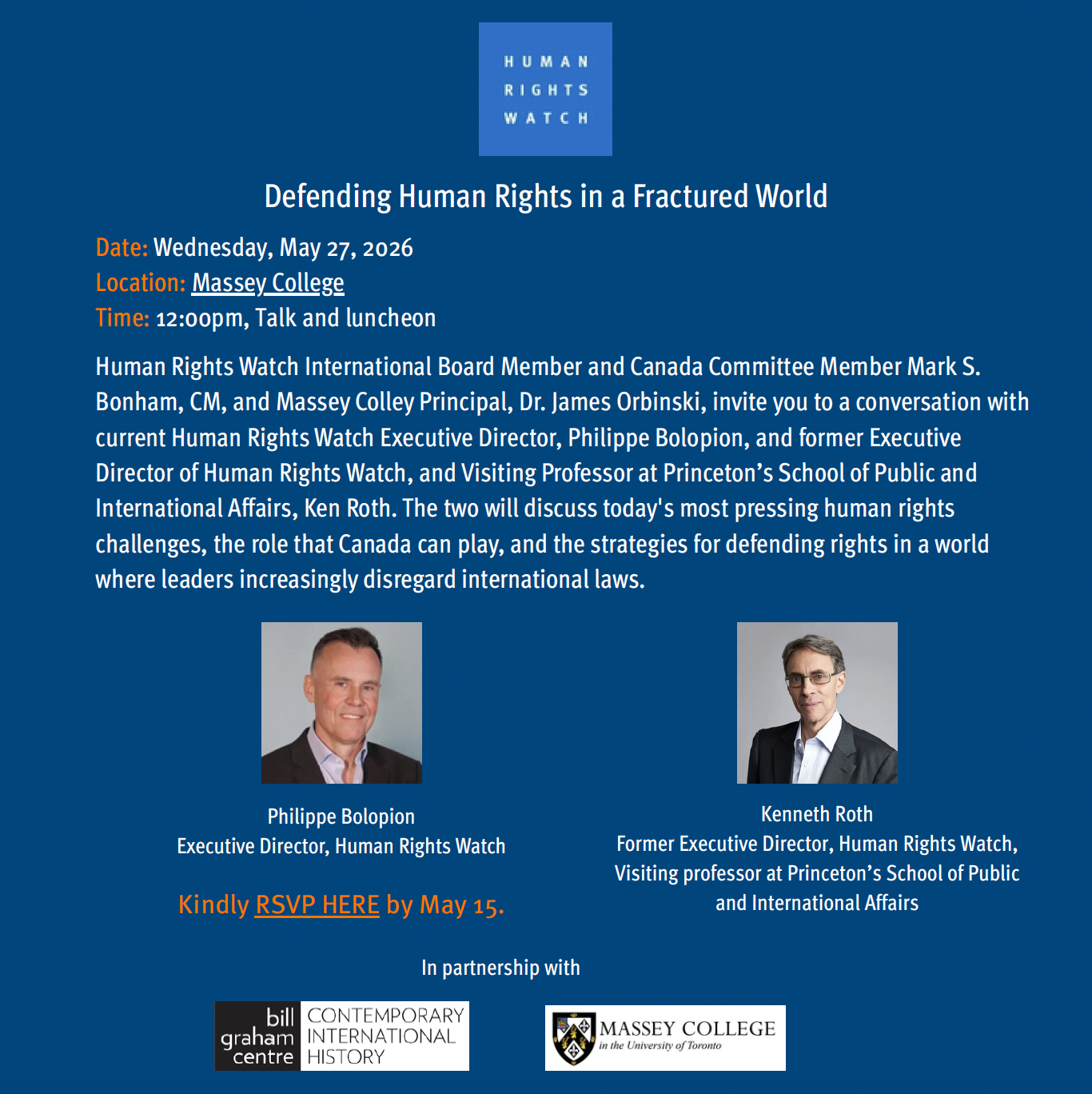
Join us for a conversation exploring the future of Canada-US relations as Donald Trump begins his second presidency. This thought-provoking conference features 3 expert panels on how Trump's return to the White House will shape Canada's policy, economy, and security.
In his first presidential term, Donald Trump heralded the arrival of an “America First” foreign policy that would critically examine and scale back the commitments and responsibilities America had taken on as a world power, and focus directly on promoting America’s national interest. As he comes back to the White House, what type of foreign policy will Trump 2.0 carry out? How will America’s allies and adversaries react? This talk will attempt to provide some answers, recognizing the uncertainty and unpredictability characteristic of Trump’s decision-making style.
With the award of the 2024 Nobel Peace Prize to the antinuclear group Nihon Hidankyo and discussion of the Treaty on the Prohibition of Nuclear Weapons, this is a fitting time to discuss the arguments for and against the abolition of nuclear weapons. Florian Eblenkamp, Advocacy Officer of the International Campaign to Abolish Nuclear Weapons and Jack Cunningham, Program Coordinator of the Bill Graham Centre for Contemporary International History offer contending perspectives, followed by a Q&A and general discussion.
On November 25th, Dr. Eboe-Osuji and Prof. Orange will discuss the concept of immunity within International law and the issue of holding heads of state accountable for war crimes, genocide, and other crimes against humanity.
This book traces the history of Canadian foreign policy from a time when positioning Canada First meant shunning international obligations to today. It highlights key decisions taken and not taken in Ottawa that have shaped Canadians' safety, security, and prosperity over the last one hundred years. Case studies focused on environmental reform, Indigenous peoples, trade, hostage diplomacy, and wartime strategy illustrate the breadth of issues that shape contemporary Canada's global realm.
Dr. Sundeep Waslekar will argue that we live in the most dangerous epoch in the history of human civilization. With the fires spreading in Ukraine, the Middle East, Africa, and East Asia, and an escalating arms race in killer robots, hypersonic missiles, and deadly pathogens, is the world sleep walking into a global catastrophic war that will annihilate the human race? He will then proceed to propose a global social contract, a blueprint for multilateral reform, and a framework for reorienting global governance which will enable a paradigm shift to make lasting peace a reality.
The 25th anniversary of the arrival of Kosovar Albanians to Canada and Canada’s military and diplomatic involvement in Kosovo presents a special opportunity to revisit Canada’s unique humanitarian undertaking in 1999. To commemorate this event, a two-day symposium will be held which will bring together academics, immigration officials, policymakers, politicians, private citizens, representatives from aid organizations, as well as members of the Kosovar Albanian community.
Canada’s longest war (2001-2014) pushed military, diplomatic, development and humanitarian organizations to their limits. Was it all in vain?
Based on interviews with twenty-one key decision-makers and participants, many of whom are speaking publicly for the first time, Unwinnable Peace recounts the personal and professional challenges faced by individuals deeply committed to securing and rebuilding Kandahar province.
You’re invited to the Annual Couchiching Conference on October 8-9, 2024 at the Aga Khan Museum in Toronto, Ontario in the beautiful Nanji Family Foundation Auditorium.
The Couchiching Conference, co-hosted by the Canadian International Council (CIC) and in partnership with the Aga Khan Museum, aims to foster an inclusive dialogue on the evolving role of diplomacy on the international stage. This event will provide a platform for citizens, journalists, academics, and students to engage in meaningful discussions on international affairs, reflecting our shared mission to give Canadians a voice in global matters.